
Technology Has Become Essential to Legal Practice
Running a successful law firm today involves much more than legal expertise. Attorneys depend on digital systems to manage cases, communicate with clients, prepare documents, conduct research, and meet important deadlines. From the moment a client contacts a firm to the final stages of a legal matter, technology supports nearly every part of the process. When these systems work reliably, legal professionals can concentrate on delivering quality representation. When they fail, even a minor technical issue can interrupt an entire workday.
Consider what happens when an attorney cannot access a case management platform just before an important meeting. Documents become unavailable, staff members scramble to find alternative files, and valuable time is lost troubleshooting a problem that should never have interrupted their work. These disruptions are more than inconveniences because they affect productivity, client service, and potentially the firm’s reputation. For smaller legal practices, where employees often handle multiple responsibilities, the impact can be particularly significant.
The challenge is that many law firms treat technology as something to address only when it breaks. They purchase computers, install software, and assume everything will continue working until a problem appears. Unfortunately, modern IT environments require ongoing maintenance, cybersecurity protection, and careful planning. A dependable technology partner helps law firms move away from this reactive approach and build systems that support their everyday responsibilities.
Why Law Firms Face Unique Technology Challenges
Legal practices operate in an environment where confidentiality, accuracy, and timely communication are essential. Attorneys regularly handle sensitive information involving financial transactions, litigation strategies, personal records, and confidential business agreements. This creates technology requirements that differ from those of many ordinary businesses. A law firm’s IT systems must not only perform efficiently but also help safeguard information and maintain access to critical documents.
Protecting Confidential Client Information
Client confidentiality is one of the legal profession’s most important responsibilities. Law firms store substantial amounts of sensitive information, including personal identification documents, financial records, and privileged communications. If this information is exposed through a compromised email account, stolen device, or poorly secured cloud platform, the consequences can extend beyond immediate technical damage.
Effective protection requires multiple layers of security. Strong authentication, access controls, encryption, endpoint protection, and secure backup practices can reduce exposure to common threats. Staff training is equally important because employees regularly receive emails, attachments, and links from unfamiliar parties during legitimate legal work. A convincing phishing message can look like routine client communication.
No cybersecurity solution can eliminate every risk. However, a structured security programme can make attacks harder to execute, improve detection and support a faster response when incidents occur. For law firms, this is essential to protecting professional relationships.
Managing Time-Sensitive Legal Work
Legal work often involves deadlines that can’t be moved because a computer stops working. Attorneys may need immediate access to documents before court appearances, depositions, negotiations, or client meetings. An unavailable server or malfunctioning application can disrupt these activities and create unnecessary pressure.
Reliable IT support helps firms prepare for these situations. Monitoring, preventive maintenance, and documented recovery procedures can reduce the likelihood and impact of unexpected failures. Just as attorneys prepare for different legal scenarios, their technology systems should be designed with contingencies in mind.
The Hidden Costs of Unreliable IT Systems
Technology problems often create expenses that do not appear directly on an IT invoice. An attorney who spends thirty minutes dealing with an unavailable application loses time that could have been devoted to client work. If several employees experience the same issue, the cumulative impact becomes much greater. Administrative staff may also spend additional time rescheduling appointments, locating documents, or repeating tasks.
These interruptions can affect more than productivity. Clients expect timely responses and dependable communication, particularly when dealing with sensitive or urgent legal matters. If technical difficulties repeatedly delay updates or document exchanges, clients may begin questioning the firm’s operational reliability.
There are also longer-term costs associated with poorly maintained systems. Outdated software, unsupported hardware, and inconsistent backup procedures can increase the likelihood of serious incidents. Proactively addressing these weaknesses is often more manageable than responding to a major failure under pressure.
Why General IT Support May Not Be Enough
A general IT provider may be able to repair computers and resolve network problems, but legal practices benefit from support that understands how attorneys actually work. This distinction matters when technology problems affect case management, document access, or court-related deadlines. A provider familiar with legal operations can better prioritise issues by business impact.
Understanding Legal Software and Workflows
Law firms often use specialised applications for case management, document preparation, billing, time tracking and client communications. These systems must work together to support efficient operations. Poor integration can create duplicated work, inconsistent records and unnecessary administrative tasks.
An IT partner with legal industry experience can help identify opportunities to improve these workflows. This might involve strengthening access controls, simplifying document storage, or improving how employees collaborate across different locations. Technology should make legal work easier, not add complications.
Supporting Attorneys During Critical Deadlines
Not every technical issue carries the same urgency. A printer malfunction in an unused meeting room is different from an attorney losing access to essential documents shortly before a filing deadline. Effective IT support requires understanding these priorities and responding accordingly.
Law firms should look for providers with clear escalation procedures, responsive help desk services and experience supporting time-sensitive professional environments. This helps ensure that important problems receive appropriate attention.
Cybersecurity as a Foundation of Client Trust
Clients share confidential information with law firms because they expect it to be handled responsibly. Cybersecurity therefore plays a direct role in maintaining professional trust. Protecting information involves more than installing antivirus software or creating complicated passwords. It requires ongoing attention to user access, network security, software vulnerabilities, and incident response.
Modern threats can arrive through phishing emails, malicious attachments, compromised credentials, and vulnerable applications. Law firms should implement security controls appropriate to their size, systems and risk exposure. Multifactor authentication, regular updates, secure backups and employee awareness training are important elements of this approach.
Cybersecurity should also be viewed as a continuing process rather than a one-time project. Technology changes, employees join and leave organisations, and new vulnerabilities emerge. Regular reviews help firms identify weaknesses and adjust their protection accordingly.
The Importance of Proactive IT Management
Reactive IT support focuses on resolving problems after employees report them. Proactive management takes a different approach by monitoring systems, maintaining equipment, and addressing warning signs before they cause major interruptions. This shift can improve reliability and make technology expenses more predictable.
Preventing Problems Before They Escalate
Many technical failures start with warning signs. Devices may run low on storage, applications may become unstable, or security updates may remain uninstalled. Without regular monitoring, these issues can go unnoticed until they interrupt operations.
Proactive IT management involves identifying these conditions and addressing them systematically. Routine maintenance, patch management, and performance monitoring help reduce avoidable disruptions. The result is an IT environment that receives ongoing attention instead of emergency repairs alone.
Supporting Secure Remote Work
Attorneys increasingly need access to documents and communication tools outside the traditional office. Remote access can improve flexibility, but it also introduces security and management challenges. Personal devices, unsecured networks, and inconsistent access controls can increase exposure to threats.
A properly designed remote working environment uses secure authentication, appropriate device management, and carefully controlled access to confidential information. It should also provide employees with reliable tools for communication and collaboration.
Choosing the Right Technology Partner
Selecting an IT provider requires more than comparing monthly fees. Law firms should consider whether the provider understands legal operations, offers appropriate security services, and can respond effectively when important systems fail. Clear communication is especially valuable because attorneys and administrative staff should not need advanced technical knowledge to understand their IT arrangements.
A suitable partner should be willing to review the firm’s existing systems, identify risks, and explain recommendations in straightforward language. Transparent service agreements, documented responsibilities, and clear support procedures also help establish expectations.
The best working relationships develop when IT providers understand the firm’s objectives rather than treating every technical problem as an isolated repair request. This creates opportunities for long-term planning and operational improvement.
How Digital Crisis Supports Law Firms
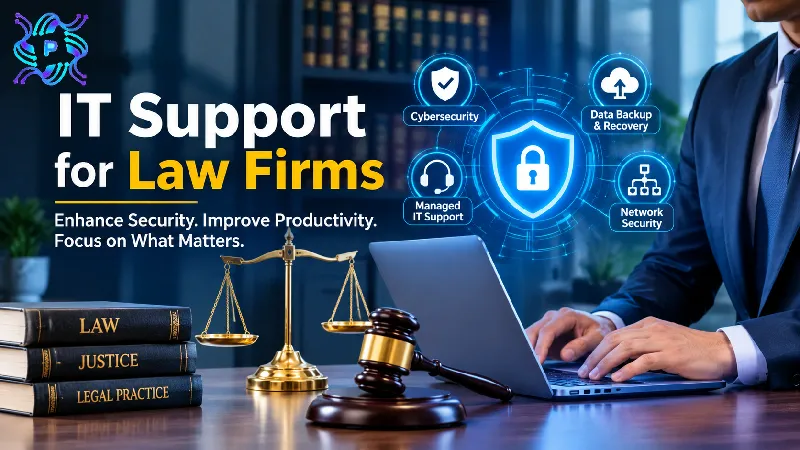
Law firms seeking specialised technology support can explore Digital Crisis, a Houston-based IT provider focused on supporting legal practices. Its published services include cybersecurity, network security, managed IT support, data backup and recovery, and technology solutions designed around the demands of law firms.
The company also emphasises responsive support and practical technology management. Its approach helps attorneys spend less time on technical issues and more time serving clients.
Building a Technology Strategy for the Future
A law firm’s technology needs rarely stay the same. New employees, additional practice areas, remote working arrangements, and growing document volumes can place greater demands on existing systems. Without planning, technology may become increasingly difficult to maintain.
A long-term IT strategy should consider infrastructure, cybersecurity, software integration, data protection and employee training. Regular assessments help identify where improvements are needed and which investments will provide practical benefits.
Technology should support the firm’s growth rather than limit it. By treating IT as an ongoing business priority, legal practices can build a more reliable foundation for delivering professional services.
Conclusion
Modern law firms need technology that is secure, dependable, and suited to the demands of legal work. From protecting confidential information to meeting critical deadlines, reliable IT systems play a major role in daily operations.
Choosing a technology partner with legal industry experience can help firms manage risk, improve workflows, and reduce unnecessary disruptions. With proactive planning and appropriate support, attorneys can spend more time focusing on their clients and less time dealing with technical problems.
Frequently Asked Questions
Why do law firms need specialised IT support?
Law firms handle confidential information and time-sensitive work that require reliable systems, appropriate cybersecurity controls, and responsive technical assistance.
What cybersecurity risks do law firms face?
Common risks include phishing, ransomware, compromised accounts, data theft and vulnerabilities in outdated software.
Can IT support improve law firm productivity?
Yes. Reliable systems, faster troubleshooting, and better software integration can reduce administrative interruptions and support more efficient workflows.
Should small law firms use professional IT services?
Small firms can benefit from external expertise, especially when they don’t have dedicated internal IT staff.
How often should a law firm review its IT systems?
Regular monitoring should be ongoing, with broader security and infrastructure assessments conducted periodically and after significant operational changes.