
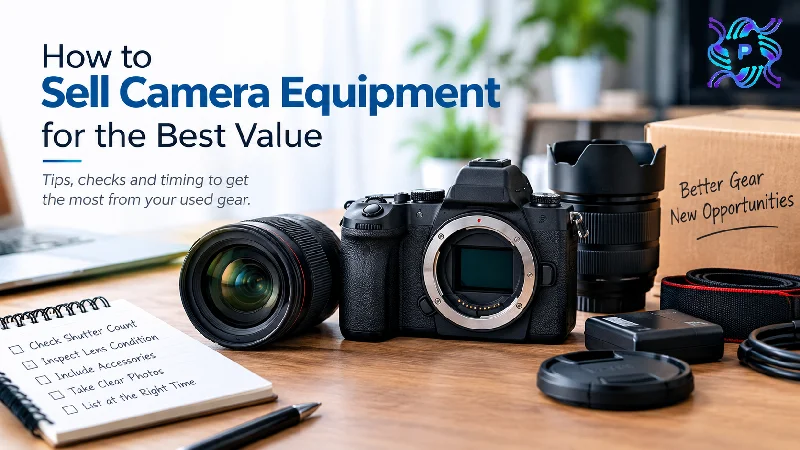
Photographers often accumulate equipment gradually. A first camera leads to a better body, then a second body for events, while lenses stay in the collection for years. Eventually, some equipment stops getting enough use to justify keeping it. Selling those items can help recover part of the original investment, but used photography gear needs a different evaluation than ordinary consumer electronics.
Buyers tend to examine details that matter directly to image-making. Shutter count, lens condition, sensor cleanliness, autofocus performance, physical wear, included accessories, and service history can all affect how attractive a piece of equipment appears on the secondhand market.
Timing matters as well. Camera manufacturers periodically release new bodies, lenses, and major system updates. Photographers who understand how those releases affect demand can make more informed decisions about when to sell older equipment.
Shutter Count and Working Condition Tell the Real Story
Camera bodies are judged heavily by their working condition. Shutter count is one of the first specs many experienced buyers check because it indicates how much a mechanical shutter has been used. Don’t treat it as a guaranteed predictor of remaining life, since actual durability varies by camera model and individual unit.
A low shutter count can make a used body more attractive, particularly when the rest of the camera is in excellent condition. However, a higher count does not automatically make a camera worthless. Professional photographers may use equipment extensively while maintaining it carefully, and buyers understand that shutter ratings are estimates, not expiration dates.
Physical condition adds another layer. Scratches on the body may be cosmetic, while damage around the lens mount, hot shoe, battery compartment, or card slots can raise more serious concerns. Buttons and dials should operate normally, and the display should function without obvious problems.
A camera’s actual performance should also be considered. Autofocus, image capture, exposure controls, ports, memory-card slots, and battery operation can all be checked before sale. A detailed description gives potential buyers a clearer basis for judging the equipment.
Lens Condition Can Make or Break Used Gear Value
Lenses deserve their own inspection because their optical condition can directly affect photographs. A small amount of ordinary exterior wear may not matter much, but scratches, haze, fungus, or damage to optical elements can change the value considerably.
Photographers should inspect the front and rear elements under suitable lighting. Dust inside a lens isn’t always a major problem, especially if it doesn’t affect images, but visible contamination should be described accurately. Fungus is more concerning because it can affect optical performance and may require professional attention.
The mount should be checked as well. A damaged mount, excessive looseness, or signs of impact can make a lens less appealing even if the glass appears clean. Autofocus and aperture functions should be tested on a compatible camera.
Accessories can affect a lens’s overall appeal. Front and rear caps, lens hoods, protective cases, and original packaging help buyers understand how the equipment has been maintained. They may not recoup their original retail cost, but complete accessories can make for a more convincing resale presentation.
Photographers should avoid aggressive cleaning. Optical coatings can be damaged by unsuitable materials or excessive pressure. Gentle, manufacturer-appropriate cleaning is generally safer than attempting to remove every tiny mark.
Document the Gear Before Listing or Taking It to a Buyer
Good documentation reduces uncertainty. Before selling a camera or lens, record the exact model, serial number (for personal records), shutter count (where available), included accessories, known defects, and general condition.
Photographs should show the actual equipment rather than relying on stock images. Useful pictures include the front and rear of the camera, the lens mount, screens, body corners, lens glass, included accessories, and any visible scratches. Honest images can prevent later disagreements because the buyer knows what they’re getting.
Cleaning should come before photography. Dust and fingerprints can obscure the condition of otherwise good equipment. At the same time, keep cleaning conservative. A used camera does not need to look factory-new to be valuable.
Original boxes are also worth keeping if available. Packaging does not erase functional defects, but it can help present a complete kit. Manuals, straps, cables, battery chargers, caps, and other manufacturer-supplied items should be gathered before the equipment is evaluated.
A short written record is useful too. Photographers who own several similar lenses can easily mix up filters, caps, or hoods. Temporarily labeling items during preparation can prevent accessories from being accidentally left behind.
Timing a Sale Around New Camera Releases
Demand for camera equipment can shift when manufacturers introduce new models. A new body may make an older generation less desirable, especially if the newer model addresses a feature buyers strongly care about. However, older cameras can retain market share because they may offer a lower-cost entry point into a particular system.
Photographers planning an upgrade should monitor release cycles rather than waiting until the replacement is already widely available. If an existing body is going to be sold regardless, preparing it before the successor dominates buyer attention can provide more flexibility.
The same principle applies to lenses, although lens demand can behave differently. A well-regarded lens may remain desirable for many years, especially when it is compatible with multiple bodies. A discontinued lens can even retain interest if photographers value its optical characteristics, though there is no guarantee of price appreciation.
Seasonal demand can matter as well. Photographers preparing for weddings, travel, graduations, sports seasons, or other events may look for used equipment at particular times of year. Those patterns are not universal, so sellers should treat them as market observations rather than guarantees.
The safest approach is to avoid assuming that a particular release date will produce a predictable price change. Instead, compare recent offers, current demand, and the equipment’s condition.
Choosing Between Private Listings and In-Person Selling
Photographers have several ways to sell used gear. Online marketplaces can reach a large audience, which may help sell uncommon lenses or specialized equipment. The tradeoff is additional work. Sellers may need to create detailed listings, respond to questions, negotiate, package equipment, arrange shipping, and manage payment concerns.
Specialist photography marketplaces can attract buyers who understand camera equipment, but they may also require more detailed descriptions and careful communication. Auction-style platforms introduce another variable because the final amount depends on bidding activity.
Local selling offers a more direct alternative. Someone who wants to sell camera equipment at PayMore can choose an in-person evaluation instead of preparing a long online listing. That approach may be especially convenient for photographers with several older bodies, lenses, or accessories to clear out at once.
The best choice depends on the seller’s priorities. A private listing may give you more control over the asking price, while an in-person buyer may reduce the time and effort needed to complete the sale. Neither route guarantees a specific return.
Before accepting an offer, photographers should compare the amount received with the work involved in achieving it. Shipping costs, platform fees, insurance, negotiation time, and the possibility of returns can change an online sale’s practical value.
A Practical Final Check Before Selling
A final inspection helps ensure that valuable details are not overlooked. Photographers can use a short preparation list before handing equipment to any buyer:
- Record the exact model and shutter count where applicable.
- Test autofocus, controls, ports, card slots, screens, and batteries.
- Inspect lens elements, mounts, caps, and filters.
- Clean the equipment carefully using suitable materials.
- Gather boxes, chargers, straps, hoods, cases, and other accessories.
- Photograph the actual equipment and document visible wear.
- Remove personal files, memory cards, and custom account information.
- Compare several selling routes before accepting an offer.
These steps are especially useful for photographers who have accumulated equipment over many upgrade cycles. A little organization can prevent you from forgetting a valuable accessory or discovering a defect only after the transaction begins.
Keeping Value in Perspective
Used camera equipment doesn’t retain value just because it was expensive when new. Its current worth depends on what buyers need, how well it works, its condition, compatibility with current systems, and demand for that model.
Photographers can improve their position by keeping gear clean, retaining useful accessories, documenting usage, and avoiding unnecessary damage. Selling before a replacement model changes market expectations can also offer more flexibility, though release timing should never be treated as a guaranteed predictor of price.
Most importantly, the selling process should reflect the equipment’s actual condition. Accurate information builds trust and makes price comparisons more meaningful. A well-maintained camera with a documented shutter count and a clean lens is easier to evaluate than one with an uncertain history.
For photographers who upgrade regularly, resale should be part of equipment management. Knowing what is sitting unused, understanding its current condition, and choosing a selling route that fits your desired balance of price and convenience can turn older gear into useful value instead of letting it sit forgotten in a camera bag.