
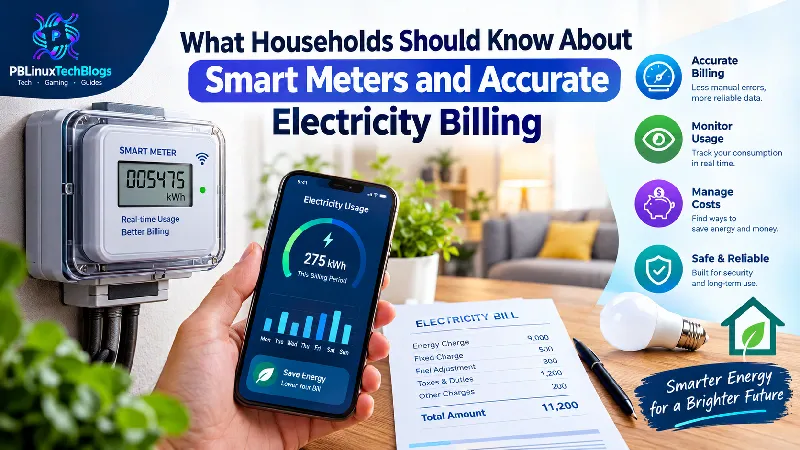
Electricity bills are a major part of every household budget. From air conditioners and refrigerators to washing machines and lighting, daily electricity consumption can quickly increase monthly expenses. Smart meters help modern households monitor electricity use and improve billing accuracy. However, understanding how these meters work and how electricity bills are calculated is essential for every consumer.
In this article, we will explain what households should know about smart meters and accurate electricity billing, including their benefits, common billing issues, and practical ways to manage electricity costs.
What Is a Smart Electricity Meter?
A smart electricity meter is an electronic device that measures how much electricity a household consumes. Unlike traditional meters that may require manual readings, smart meters can automatically send consumption data to electricity providers through a communication network.
Depending on the system, customers may also view their electricity usage through a mobile app, online account, or digital display. This information helps households understand their energy use and find ways to save money.
However, smart meter features vary by provider and location. Not every smart meter offers real-time monitoring or direct access to detailed consumption data.
How Smart Meters Improve Electricity Billing Accuracy
Smart meters can improve billing accuracy by reducing manual reading errors and providing more timely consumption data.
1. Automatic Meter Readings
Traditional meters may require a meter reader to visit a property and record the displayed reading. Human errors or incorrect data entry can sometimes affect the billing process.
Smart meters can automatically transmit readings to electricity providers, reducing the need for manual collection and helping bills reflect actual consumption.
2. Fewer Estimated Bills
When a utility company cannot obtain an actual meter reading, it may estimate a bill based on previous consumption.
Smart meters can reduce reliance on estimates when their communication systems operate correctly. Nevertheless, technical problems or communication failures may still result in estimated readings or billing adjustments.
3. Better Electricity Usage Monitoring
Some smart metering systems provide daily or hourly consumption information. Households can use these details to understand when they consume the most electricity and adjust their habits accordingly.
Understanding Your Electricity Bill
Electricity consumption is generally measured in kilowatt-hours (kWh). Your electricity provider uses the recorded consumption and applicable tariff to calculate your energy charges.
For example, if a household consumes 300 kWh and the electricity rate is 30 currency units per kWh, the basic energy charge would be 9,000 currency units.
The final bill may also include taxes, fixed charges, fuel adjustments, and other applicable fees. Therefore, consumers should review all bill components rather than checking only the total amount.
Understanding these charges makes it easier to identify unusual increases and ask the electricity provider for clarification.
Common Reasons for High Electricity Bills
Even when a smart meter works correctly, several factors can cause an unexpectedly high electricity bill.
Increased electricity consumption: Using air conditioners, electric heaters, water pumps, and other high-power appliances more frequently can increase energy consumption.
Tariff changes: Electricity prices and billing rules may change, causing bills to rise even when consumption remains similar.
Estimated reading adjustments: A bill based on an actual reading may include adjustments for previously estimated consumption.
Faulty appliances: An inefficient refrigerator, a malfunctioning air conditioner, or an electrical problem may increase energy use.
Billing errors: Incorrect tariff information, account details, or meter readings can also affect the amount charged.
Checking these factors can help households determine whether a higher bill reflects actual usage or requires further investigation.
How to Check Your Smart Meter Reading
Regularly checking your meter reading is a simple way to monitor electricity consumption and spot possible billing discrepancies.
Follow these steps:
- Check the billing period: Confirm the start and end dates on your electricity bill.
- Record the current reading: Follow your meter’s instructions to identify the correct electricity register.
- Compare readings: Compare the current reading with the previous reading shown on your bill.
- Calculate consumption: Subtract the previous cumulative reading from the current reading.
- Review the charges: Check the applicable tariff, taxes, and additional fees.
For example, if your previous reading was 5,200 kWh and your current reading is 5,475 kWh, your consumption during that period is 275 kWh.
If the consumption shown on your bill differs, check for billing adjustments or multiple registers before assuming that the meter is faulty.
Practical Ways to Reduce Household Electricity Costs
Smart meters are most beneficial when households use their consumption information to make better energy decisions.
Use Appliances Efficiently
Air conditioners, water heaters, and electric heaters can consume substantial amounts of electricity. Use them only when necessary, and maintain them regularly to keep them running efficiently.
Switch to LED Lighting
LED bulbs generally use less electricity than traditional incandescent bulbs and last longer. Turning off lights you don’t need can also reduce overall consumption.
Monitor Air Conditioning
Clean air conditioner filters regularly and choose a comfortable, energy-conscious temperature. Closing doors and windows while cooling a room can help reduce unnecessary energy loss.
Avoid Unnecessary Standby Usage
Some electronic devices consume electricity even when they are not actively being used. Switch off devices when you don’t need them to reduce wasted energy.
Review Consumption Regularly
If your electricity provider offers an online dashboard or mobile application, review your usage periodically. Comparing similar billing periods can help you identify changes and adjust your energy habits.
Are Smart Meters Safe and Reliable?
Smart meters measure electricity consumption and send readings to utility providers. Their reliability depends on equipment quality, proper installation, communication systems, and accurate data processing.
Consumers may also have privacy concerns because some smart metering systems collect detailed consumption information. Electricity providers should handle this information according to applicable privacy and security requirements.
If your meter displays an error, appears damaged, or shows signs of electrical danger, contact your electricity provider or a qualified professional. Never remove meter seals or attempt to repair electrical equipment yourself.
What to Do If You Suspect a Billing Error
If your electricity bill seems unusually high, first compare your meter readings, billing period, tariff, and recent consumption.
If the difference remains unexplained, contact your electricity provider through its official customer service channel. Provide the relevant billing details and ask for an explanation of the charges.
You can also request a formal billing review or meter inspection when appropriate. Keep copies of your bills and complaint reference numbers for future follow-up.
If the issue is not resolved, consult the electricity regulator or consumer complaint authority responsible for your area.
Frequently Asked Questions
Do smart meters make electricity bills more accurate?
Smart meters can improve accuracy by automating readings and reducing manual errors. However, correct tariffs and billing calculations are still essential.
Can a smart meter increase my electricity bill?
A properly functioning meter measures consumption; it doesn’t increase it. Higher bills may result from increased electricity use, tariff changes, adjustments, or issues that require investigation.
How can I check whether my meter reading is correct?
Record the current reading, compare it with your bill, and check the billing period. Contact your electricity provider if a discrepancy remains unexplained.
Can smart meters help reduce electricity costs?
Yes. Consumption information can help households identify high-usage periods and adopt more efficient energy habits. Actual savings depend on usage patterns and electricity rates.
Conclusion
Smart meters can help households improve electricity monitoring, reduce reliance on estimated readings, and better understand their monthly bills. However, accurate billing also depends on correct tariffs, reliable data processing, and proper utility management.
By checking meter readings, reviewing electricity charges, and adopting energy-saving habits, households can identify potential billing problems and manage their electricity expenses more effectively.
Visit PBLinuxTechBlogs.com for more informative articles about technology, digital solutions, and practical tips for everyday life.